
Home -> Law Blog Directory -> Intellectual Property Law Blogs -> Seattle Trademark Lawyer
(866) 635-2689 for Personal Injury or (866) 635-9402 for Criminal Defense
Find a Local Lawyer
Divorce (866) 635-6190
Personal Injury (866) 635-2689
Criminal Defense (866) 635-9402

Intellectual Property Law
: Seattle Trademark LawyerFlorida Court Dismisses Trademark Dispute Over '80s Band Expose'
By Michael Atkins
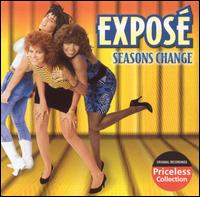 In November, Crystal Entertainment & Filmworks, Inc., brought suit in the Southern District of Florida against members of the 1980s band Exposé on the ground that it — not performers Jeanette Jurado, Ann Curless Weiss, Gioia Bruno, and Kelly Moneymaker — owns the EXPOSÉ name and common law trademark. The complaint alleged that the band members entered into agreements stating that Crystal’s predecessor owned the mark, which the predecessor assigned to Crystal, as well as a 2006 trademark license agreement with Crystal. The complaint stated claims for false designation of origin, cybersquatting, state unfair competition, breach of contract, and constructive trust.
Unfortunately for Crystal, the complaint failed to plead a basis for federal jurisdiction. On Jan. 23, Judge William Zloch dismissed the complaint without prejudice of his own accord:
“The Court notes that the Federal courts are of limited jurisdiction. The presumption, in fact, is that a Federal court lacks jurisdiction in a particular case until it has been demonstrated that jurisdiction over the subject matter exists. Rule 8(a)(1) requires that complaints contain ‘a short and plain statement of the grounds upon which the court’s jurisdiction depends.’ The basis of the district court’s jurisdiction must be alleged ‘affirmatively and distinctly and cannot ‘be established argumentatively or by mere inference.’ Plaintiffs’ Complaint fails to allege this Court’s subject matter jurisdiction over the above-styled cause. Therefore, the Court lacks federal subject matter jurisdiction over the Complaint. Although the instant Complaint cites various provisions of the Lanham Act, such citations alone are insufficient to establish subject matter jurisdiction over the case.”
The court also noted the complaint failed to establish that diversity of citizenship existed — the alternative basis for subject matter jurisdiction.
The case cite is Crystal Entertainment & Filmworks, Inc. v. Jurado, No. 07-61748 (S.D. Fla. Jan. 23, 2008).
Full post as published by Seattle Trademark Lawyer on February 06, 2008 (boomark / email).
Selection of State Supreme Court Judges
How State Court Judges are Selected
Law Enforcement and Criminal Justice Career Choices
Descriptions of law enforcement occupations
California Supreme Court Proposition 8 Decision
Court Rejects Challenges to Proposition 8, but Finds Marriages Valid
Is Barack Obama a Natural Born Citizen?
Wrotnowski v. Bysiewicz (Supreme Court): Does Obama meet the constitutional requirements to be President
Heart of Atlanta v United States
Supreme Court Decision: Civil Rights Act Protected by Interstate Commerce Clause
Unwed Fathers' Rights in Adoption
Landmark Cases in Adoption Law Shape Law with respect to Unwed Fathers
Rutland School District
Double pay offered as part of class action wage dispute settlement, pending court approval.
Rock Band Great White
Settles Over 2003 Station NightClub Fire
Adidas Imitators
Payless Shoesource to pay $304.6 million settlement in trademark lawsuit.
Ebay Fined
French Court Sets Fine at $61 Million
Personal Injury
Appeals Court Upholds Congressional Legislation
Limeno Recalls Rico Queso Duro Blanco in Florida
Limeno Recalls Rico Queso Duro Blanco in Florida

#1 Online Legal Resource

On 08-25 at 15:46PM
Acute perpendicular parking #NYPD #NYFD
On 08-18 at 22:18PM
Parallel parking gone bad. Too much gas UES NYC
On 08-18 at 21:41PM
UES NYC
On 08-18 at 21:25PM
Twitter suspends journalist critical of broadcast partner's coverage on dubious grounds @guyadams #nbcfail #twitterfail
On 07-30 at 17:57PM
Model example of 1st Amendment suppression by the People of New York City's Michael Bloomberg #OWS #NYPD
On 07-12 at 21:07PM
AG Holder lackadaisical on Operation in our Sites domain name seizures & RIAA lobbied free speech suppression @dajaz1
On 06-08 at 22:44PM
Why is the Catholic Church going to court over Obama contraception policy? @NewYorker commentary
On 05-31 at 10:08AM
Monks sue Louisiana for right to sell caskets made from forrest destroyed by Katrina
On 05-31 at 07:47AM
Are the abortion ultrasound laws headed for the Supreme Court?
On 05-15 at 21:52PM


Are The Wailers Crying: Band Name Disputes
Rock concert to benefit trademark preservation
Tamera Bennett Quoted on Budweiser Trademark Dispute
In Doors Rock Band Dispute, Ninth Circuit Finds Insurer Duty to Defend Against Trademark Claims
Trademark Battle Between the Wolfgangs


 |
|
Contact Us | About Us | Celebrity Law Blog |
Our Partners | Disclaimer
| Law Blog Directory
| Law Jobs
| Law Tweets
| Oil Spill Video
All original material © 1999-2011 by USLaw.com. All other material, including Blog Directory feed content, are © by their respective copyright holders. |