
Home -> Law Blog Directory -> Intellectual Property Law Blogs -> IPKat
(866) 635-2689 for Personal Injury or (866) 635-9402 for Criminal Defense
Find a Local Lawyer
Divorce (866) 635-6190
Personal Injury (866) 635-2689
Criminal Defense (866) 635-9402

Intellectual Property Law
: IPKatGermany's rise to industrial power: due to lack of copyright?
By Johanna Gibson, David Pearce, Jeremy Phillips and Ilanah Simon.
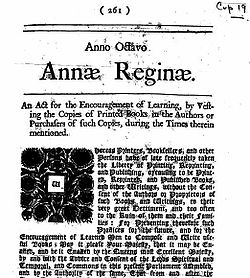 The economic historian Eckhard Höffner proposes a controversial theory: Germany's rise (and Great Britain's relative decline) in industrial and technological innovation in the early 19th century was due to a lack of copyright in Germany prior to about 1840, and strong copyright protection in Great Britain since 1710. Copyright made publishers rich ("driving around the city in gilt carriages"), but meant that books were not affordable for the masses, while the cheap plagiarized copies in Germany led to the distribution of knowledge among all classes of society. From the Spiegel article on the book:
The thesis is certainly going to stir up some debate. From the Spiegel article, there appear to be at least some inconsistencies:Höffner has researched that early heyday of printed material in Germany and reached a surprising conclusion -- unlike neighboring England and France, Germany experienced an unparalleled explosion of knowledge in the 19th century.
German authors during this period wrote ceaselessly. Around 14,000 new publications appeared in a single year in 1843. Measured against population numbers at the time, this reaches nearly today's level. And although novels were published as well, the majority of the works were academic papers.
The situation in England was very different. "For the period of the Enlightenment and bourgeois emancipation, we see deplorable progress in Great Britain," Höffner states.
Indeed, only 1,000 new works appeared annually in England at that time -- 10 times fewer than in Germany -- and this was not without consequences. Höffner believes it was the chronically weak book market that caused England, the colonial power, to fritter away its head start within the span of a century, while the underdeveloped agrarian state of Germany caught up rapidly, becoming an equally developed industrial nation by 1900.
Even more startling is the factor Höffner believes caused this development -- in his view, it was none other than copyright law, which was established early in Great Britain, in 1710, that crippled the world of knowledge in the United Kingdom.
The German proliferation of knowledge created a curious situation that hardly anyone is likely to have noticed at the time. Sigismund Hermbstädt, for example, a chemistry and pharmacy professor in Berlin, who has long since disappeared into the oblivion of history, earned more royalties for his "Principles of Leather Tanning" published in 1806 than British author Mary Shelley did for her horror novel "Frankenstein," which is still famous today.
This Kat wonders how Hermbstädt could earn substantial royalties absent copyright protection, but maybe he is missing the point. It appears clear that Germany had a very different publishing industry than Great Britain during that time, with a lot more technical/engineering type of books put out; but was lack of copyright really the reason for this?

Full post as published by IPKat on August 20, 2010 (boomark / email).
Copyright Lawsuits: Critical Issues Before Filing Copyright
Federa Rule 11(b) Considerations
Power of Attorney and Living Wills for the aged
Options for caring for aging parents
Estate Planning
Documents: durable power of attorney, living will, letter of instruction, and insurance trust
Grandparents Visitation Rights
Every state lets elderly grandparents petition to visit grandchildren
Living Wills and Powers of Attorney
Laws effecting the elderly
Bunk Beds
Injuries on the rise
FAA
Signficant Lack of Oversight in Airline Maintenance
Bandsaws Recalled by Grizzly Industrial
Bandsaws Recalled by Grizzly Industrial
Spike Lee and Showtime
Settlement reached in script copyright infringement lawsuit.
Industrial Toxins
Solutia Inc. agrees to pay $3.6 million EPA settlement.
Pork Plant Explosion
IHP Industrial, Triumph Foods, Epstein and Sons, and Missouri Gas Energy pay over $12.3 million in wrongful death and personal injury settlements.

#1 Online Legal Resource

On 08-25 at 15:46PM
Acute perpendicular parking #NYPD #NYFD
On 08-18 at 22:18PM
Parallel parking gone bad. Too much gas UES NYC
On 08-18 at 21:41PM
UES NYC
On 08-18 at 21:25PM
Twitter suspends journalist critical of broadcast partner's coverage on dubious grounds @guyadams #nbcfail #twitterfail
On 07-30 at 17:57PM
Model example of 1st Amendment suppression by the People of New York City's Michael Bloomberg #OWS #NYPD
On 07-12 at 21:07PM
AG Holder lackadaisical on Operation in our Sites domain name seizures & RIAA lobbied free speech suppression @dajaz1
On 06-08 at 22:44PM
Why is the Catholic Church going to court over Obama contraception policy? @NewYorker commentary
On 05-31 at 10:08AM
Monks sue Louisiana for right to sell caskets made from forrest destroyed by Katrina
On 05-31 at 07:47AM
Are the abortion ultrasound laws headed for the Supreme Court?
On 05-15 at 21:52PM


Industrial Design in Canada & US
German Constitutional Court Rejects Greek Challenge; for the time-being
Copyright Criminals: PBS Documentary on Sampling
Germany's data retention law ruled unconstitutional over privacy concerns


 |
|
Contact Us | About Us | Celebrity Law Blog |
Our Partners | Disclaimer
| Law Blog Directory
| Law Jobs
| Law Tweets
| Oil Spill Video
All original material © 1999-2011 by USLaw.com. All other material, including Blog Directory feed content, are © by their respective copyright holders. |