Home -> Law Blog Directory -> Intellectual Property Law Blogs -> Seattle Trademark Lawyer
(866) 635-2689 for Personal Injury or (866) 635-9402 for Criminal Defense
Find a Local Lawyer
Divorce (866) 635-6190
Personal Injury (866) 635-2689
Criminal Defense (866) 635-9402

Intellectual Property Law
: Seattle Trademark LawyerDepiction of Betty Boop Cartoon Aesthetically Functional, Not Infringing
By Michael Atkins
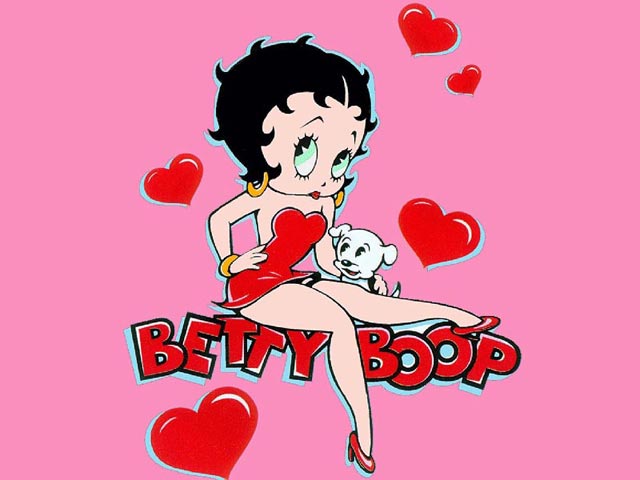 Betty Boop
Depictions of the Betty Boop cartoon character are aesthetically functional and governed by copyright law. Therefore, they’re not protectable as trademarks.
The Ninth Circuit made those findings on Feb. 23.
Interestingly, it based its decision on two cases neither party cited in its briefs.
The Ninth Circuit affirmed the Central District of California’s summary judgment dismissal of plaintiff Fleischer Studios, Inc.’s trademark (and copyright) claims against defendant A.V.E.L.A., Inc., for reproducing the cartoon’s image on toys, dolls, and merchandise.
It found that International Order of Job’s Daughters v. Lindeburg & Co., 633 F.2d 912 (9th Cir. 1980), and Dastar Corp. v. Twentieth Century Fox Film Corp., 539 U.S. 23 (2003), barred plaintiff’s claims. Following Job’s Daughters, the court concluded “‘the articles themselves, the defendant’s merchandising practices, and any evidence that consumers have actually inferred a connection between the defendant’s product and the trademark owner,’ reveal that A.V.E.L.A. is not using Betty Boop as a trademark, but instead as a functional product.” In other words, consumers buy the good for the cartoon, not because the cartoon signifies it came from a particular source.
As for Dastar, the court concluded: “If we ruled that A.V.E.L.A.’s depictions of Betty Boop infringed Fleischer’s trademarks, the Betty Boop character would essentially never enter the public domain….” The Dastar court held that where a copyright is in the public domain, a party may not assert a trademark infringement action against an alleged infringer if that action is essentially a substitute for a copyright infringement action. Put another way, when a copyrighted work is at issue, an owner can’t do under trademark law what it can’t do can’t do under copyright law.
The court separately found that chain-of-title problems prevented Fleischer from enforcing rights under copyright law.
The case cite is Fleischer Studios, Inc. v. A.V.E.L.A., Inc., __ F.3d. __, 2011 WL 631449, No. 09-56317 (9th Cir. Feb. 23, 2011).
Full post as published by Seattle Trademark Lawyer on March 07, 2011 (boomark / email).

#1 Online Legal Resource

On 08-25 at 15:46PM
Acute perpendicular parking #NYPD #NYFD
On 08-18 at 22:18PM
Parallel parking gone bad. Too much gas UES NYC
On 08-18 at 21:41PM
UES NYC
On 08-18 at 21:25PM
Twitter suspends journalist critical of broadcast partner's coverage on dubious grounds @guyadams #nbcfail #twitterfail
On 07-30 at 17:57PM
Model example of 1st Amendment suppression by the People of New York City's Michael Bloomberg #OWS #NYPD
On 07-12 at 21:07PM
AG Holder lackadaisical on Operation in our Sites domain name seizures & RIAA lobbied free speech suppression @dajaz1
On 06-08 at 22:44PM
Why is the Catholic Church going to court over Obama contraception policy? @NewYorker commentary
On 05-31 at 10:08AM
Monks sue Louisiana for right to sell caskets made from forrest destroyed by Katrina
On 05-31 at 07:47AM
Are the abortion ultrasound laws headed for the Supreme Court?
On 05-15 at 21:52PM


Ninth Circuit: Creators Family Doesnt Hold Copyright To Betty Boop
Betty Boop And The Return of Jobs Daughters
"Betty Boop creator's family loses copyright case"
Ninth Circuit: Creator’s Family Doesn’t Hold Copyright To Betty Boop


 |
|
Contact Us | About Us | Celebrity Law Blog |
Our Partners | Disclaimer
| Law Blog Directory
| Law Jobs
| Law Tweets
| Oil Spill Video
All original material © 1999-2011 by USLaw.com. All other material, including Blog Directory feed content, are © by their respective copyright holders. |